Fabric Wrapped Acoustic Panel

A fabric-finished acoustic panel designed to absorb reflected sound energy, helping control reverberation and reflections while adding texture and colour to the interior.
Sound Absorption
Absorbs reflected sound energy to control reverberation and reflections.
Fabric Finish
Acoustic fabric textures and colours for seamless interior integration.
Modular Format
Multiple sizes and layouts for flexible acoustic wall designs.
Wall Application
Designed for wall-mounted acoustic treatment across interior spaces.
A fabric finish brings acoustic treatment into the interior design, combining sound absorption with texture, colour and modular composition.

Soft fabric surfaces add visual warmth while integrating naturally with the interior.
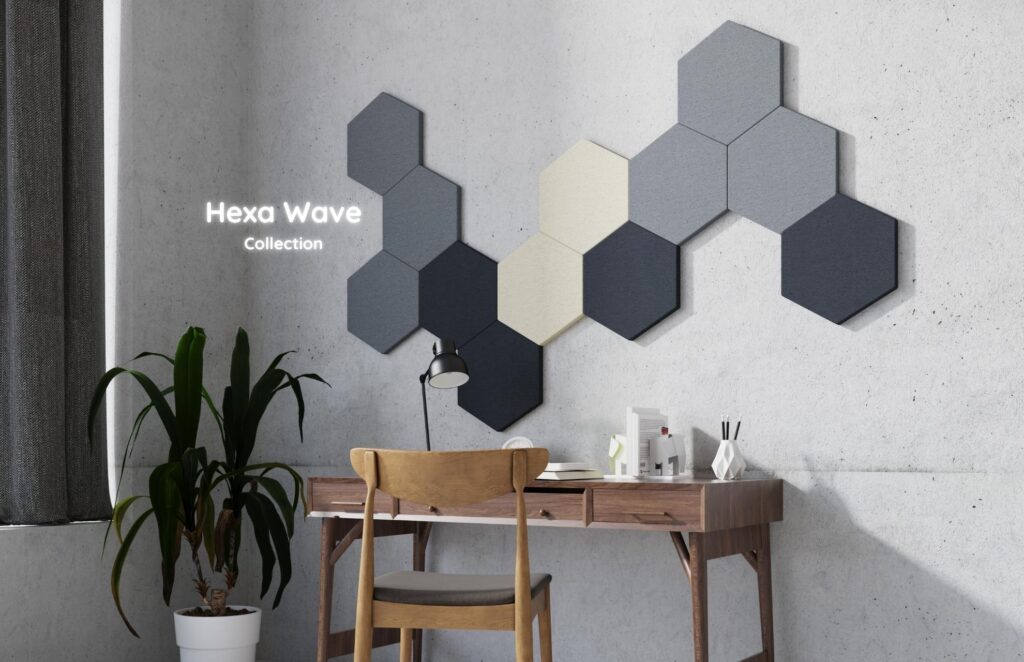
Combine different panel sizes and layouts to create flexible acoustic patterns across the wall.
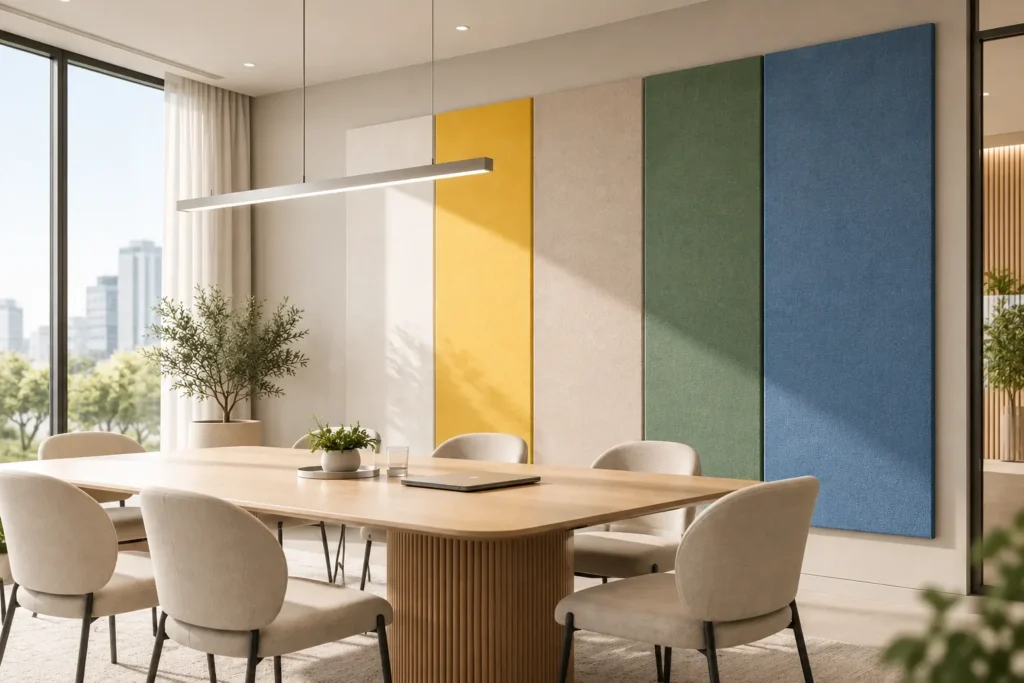
Absorbs reflected sound energy to help control reverberation and strong reflections.
The panel’s sound absorption performance varies with frequency. The curve shows the measured sound absorption coefficient across the tested frequency range.
Testing was conducted in accordance with ISO 354:2003 under the specified laboratory mounting configuration.
Choose from different panel sizes, thicknesses, fabric finishes and layouts to create an acoustic treatment that integrates naturally with the interior.
A fabric acoustic panel absorbs reflected sound energy within its effective frequency range, helping control reverberation, reflection strength and overall room liveliness.
It can help control reverberation and some reflection-related echo conditions by absorbing reflected sound energy. The result depends on the panel coverage, room geometry and installation.
No. Fabric acoustic panels are designed primarily for sound absorption within a room. They do not provide sound isolation between rooms.
Yes. Panel thickness and mounting configuration affect sound absorption, particularly at lower frequencies. Refer to the tested acoustic data for the performance of each configuration.
Placement depends on the room use, geometry and acoustic objective. Common applications include first-reflection areas, walls surrounding speech or listening zones, and other surfaces where reverberation and reflected sound need to be controlled.
There is no fixed quantity for every room. The required coverage depends on room volume, reverberation, surface finishes, occupancy, panel absorption performance and the acoustic target.


